Welcome back to another fun tasting of two single malts, where I get to explore the minuscule differences between a carefully selected pairing, take down these notes in real-time as I sip on the whiskies, pick a winner, and hopefully learn something new along the way. First up is the 12th dram from Cask Explorers’ 2022 Advent Calendar (Emerald Edition), and it’s a Laphroaig 10-year-old single malt! I spent some time trying to find a worthy contender. I have previously compared this standard edition to the same-age cask strength bottling, and, wouldn’t you know it, the cask strength was way better (of course!). I was going to put it up against a Lagavulin 16-year-old, but frankly, the latter would win the round, hands down. And so, Talisker 10-year-old it is then, which has previously appeared on these pages. And presently, I’m actually unsure of which will take the prize. So, let’s jump in. But first, we need some music! Now playing: Hidden Orchestra – To Dream is to Forget.
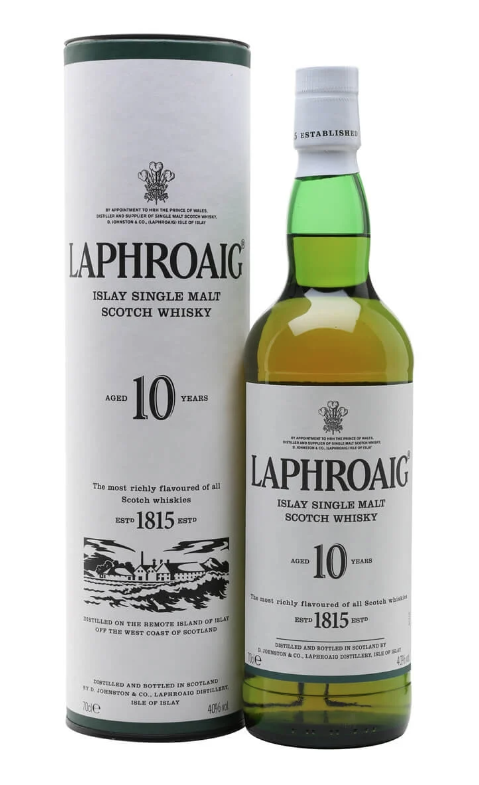
As already mentioned earlier, when I put up the “standard” Laphroaig 10-year-old against its stronger brother, it simply disappeared. This is a coloured, chill-filtered, and diluted whisky down to the most minimal possible 40% ABV. [For beginners, “chill-filtered” refers to a process where the whisky is chilled to remove certain fatty acids and proteins, which can make it appear cloudy. ABV stands for Alcohol By Volume, indicating how much of the liquid is pure alcohol. And yes, the distillery adds E150a food colouring to enhance its visual aspect.] It’s nearly a bottom-shelf dram, and the only thing “lower” on the ladder would be a non-age statement, the Laphroaig Select. But – and this is a big “but” – it is still a Laphroaig, with all of its characteristics on the nose, on the palate and beyond. And if there was a choice among the smokiest of whiskies in your “standard” bar [you know, the one with all the entry-level Glenfiddichs and Juras and Balvenies], the Laphroaig 10-year-old would still stand out. It currently goes for only £31 (on Amazon), and that’s a great price for a single malt these days [okay, Jura 10 is £26, and Black Label is only £22, but I would never drink that]. And even though this stripped-down version is very thin and quickly disappearing from my mind, it still recalls a memory of when I visited the Laphroaig distillery in the summer of 2023 and tasted its beautiful liquid directly from the cask. I brought back some samples, and yes, that’s one of the reviews I’ll have to do here side-by-side! In any case, I will conclude what’s left of this second-rate version of one of my favourite whiskies and put it to rest. I’m not even sure if I’d recommend it to a newcomer – I’d rather take a cask-strength version, dilute it myself [down to probably 46%] and then allow it to speak up. This is a muted version of a friend. I don’t know if there’s anything else to add here.
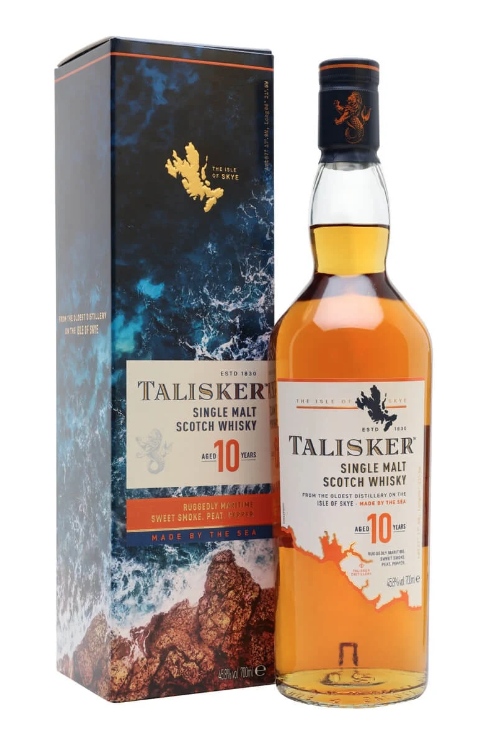
The Talisker is another enigma, especially because of its pretty wide swinging batch variation. That is because the Talisker 10-year-old from about twenty years ago was pretty damn good, then it became non-memorable, and then, just this year, it got better once again! So, how do you know which batch you’ve got there? You don’t! Unless you can decipher some vaguely printed serial numbers on the bottle and then somehow map it to some date. For those unfamiliar, batch variations can occur due to multiple factors, such as differing cask qualities or environmental conditions, which can vary from year to year. This is why some enthusiasts chase specific batches known to be of superior quality. And, basically, this year, the Talisker is good, so go and grab the bottle from the shop that stocks it often, and you may get the latest batch. I have a 20cl bottle to compare with – it still has the “old” label, and no, I cannot tell when it was filled. I’d like to say it’s not the greatest Talisker I’ve tasted. It’s also very much “demolished” because it’s coloured and chill-filtered, but, at least unlike the Laphroaig 10-year-old, it’s at a higher ABV of 45.8%. Any lower, and I would have to pour it down the drain. It’s less phenolic than the Laphroaig, but it is still a little smoky. It is sweeter, with a bit of caramel to taste. The finish is a little longer, but it still falls off the cliff. Again, relative to the Special Releases bottling from Diageo, this Talisker will stand no chance. The 8-year-old and the 11-year-old, in particular, are absolutely fantastic, so it’s a shame to spend some time in the company of their shadow. But I understand – an entry-level whisky is typically more affordable and less complex, aimed to introduce people to the brand’s core characteristics. Each brand must have an entry-level version of its product, and for Talisker, it is their 10-year-old.
| Distillery / Region | Laphroaig / Islay | Talisker / Island |
| Producer | Beam Suntory | Diageo |
| Bottler / Series | Distillery bottling / core range | Distillery bottling / core range |
| Stated Age / Vintage | 10 years od / none | 10 years od / none |
| ABV / Cask Strength | 40% / Nope | 45.8% / Nope |
| Non-chill filtered/ Uncoloured | No / No | No / No |
| Price | £31 | £25 (on sale!) |
| Did it win? / Did I like it? | No / No, not after the real Laphroaig | No / No |
| Would I buy it? / Recommend it? | No / Only as entry-level | No / Only as entry-level |
So there you have it, folks. Another interesting pairing. Let me go on and make a quick admission. The only reason I even decided to drink this Laphroaig 10-year-old is because it was the next dram in my calendar adventure. I could have skipped it – maybe I should have – but then it would feel incomplete, the journey broken. And I am a completist, after all! So, having tasted both in their sub-par dishonest presentation, how can I pick a winner here today? I’d say that if you’re new to whisky, just try them both and see which one at first appeals. I’d guess that many newbies will lean towards Talisker at first. Laphroaig may just come off medicinal and briny. But if, for some amazing reason, it appeals, go on and buy the cask-strength presentation of this whisky! With that said, I will pause here and proclaim that neither one takes down my prize, and neither is a winner. But if you have to pick one for yourself, it’s down to the smokiness.
 Two Drams A Day