Welcome to my tiny corner of the internet where I spend my time sipping on Scotch whisky, comparing the differences, jotting down these notes, and hopefully learning something new in the process. I usually pick a somewhat unfamiliar [to me] single malt and pair it up with another whisky from my collection of favourites to see how it stands out. But today, I’m returning to the basics and checking out these two staple whiskies, which you can find almost at any bar or restaurant. Indeed, I have ordered these two with my meal to see how they compare. I’m pretty familiar with both, but it’s only when sipping on them side-by-side that I can pick out the tiny differences in profile. So let’s get to it, but first, we need music! Now playing: Abul Mogard – Above All Dreams.
First, I want to talk a bit about batch variation. All that means that even though the distilleries strive to deliver a consistent product, especially when it comes to their core range releases [as is the case with these to single malts], it’s still nearly impossible to be uniform through the many years [just look at what Black Label has become!] and there will inevitably be good and bad years, even among your favourite producer. For example, and more specifically, as it concerns this review, Diageo’s Talisker has been somewhat disappointing in the last couple of years, but then, suddenly, in 2023, it has become better again. I have confirmed this by pairing various years from Talisker in particular, and I am happy to report that these rumours are true. So how can you tell which batch you’re buying? Alas, it’s pretty hard. Smaller distilleries may indicate that with a batch number on the bottle. Diageo, for example, etches a bottle code in barely visible ink on the outside of the bottle (beneath the label on the back), but then it’s hard to locate the same code on the internet to match the release date. If someone is raving about “the latest batch” from a particular distillery, you may be lucky enough to run out into your local whisky shop [which churns out a lot of bottles] and just grab the freshest delivery from the shelves [I have been lucky this way in the past]. And if you’re ordering a whisky in a restaurant, you can forget about it! So, back to my tasting – I can’t possibly tell what batches I have, and in the case of Talisker and Ardbeg, that could make a slight difference. But let’s focus on the main details.

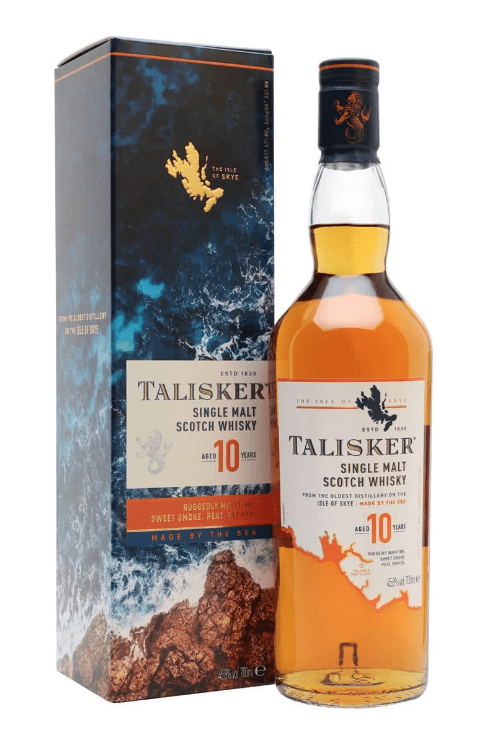
Second, let’s look at the product. Talisker is a distiller on the Isle of Skye, producing slightly smoky “Island” style whisky, and although the label proudly proclaims that it is “made by the sea”, please note that after the distillery produced the newmake spirit, it is shipped in stainless steel containers onto Scotland’s mainland, where it is filled into the barrels and that’s where it’s aged. So we don’t really understand what “made by the sea” really means. This is a coloured and chill-filtered single malt, bottled at 45.8%. This is a “smoky” whisky, but it’s not as peated as Lagavulin or Laphroaig or Ardbeg, which we are about to discover. So that’s a perfect segway onto this Islay distillery, owned by another huge brand conglomerate called Louis Vuitton Moët Hennessy. Plenty of marketing going on with the Ardbeg as well, folks, especially in the most recent years, which even includes NFT gimmicks and casks being sold for a record of £16 million. Yeah. There’s that. But! Its whisky, including the 10-year-old, is uncoloured and non-chill filtered, and for that, this 46% ABV bottle gets my integrity star in the lineup. But what about the taste? The Talisker is sweeter and smoother, with a bit of waxiness in the profile, but the filtering makes this dram pretty thin, and the addition of food colouring plays tricks on my mind. The Ardbeg is sharper, and it just cuts through with the peat. It’s grassier and herbal even, relative to the Talisker, with a medicinal smoke that lingers in a rather medium finish. It feels a bit younger than the Talisker, but who knows what type of casks [Talisker’s site just says “American oak”] or age [there could be older malts in there] are in each blended vat?
| Distillery / Region | Talisker / Island | Ardbeg / Islay |
| Producer | Deageo | LVMH |
| Bottler / Series | Distillery bottling / core range | Distillery bottling / core range |
| Stated Age | 10 years old | 10 years old |
| Cask type | “American Oak” | Ex-bourbon Barrel |
| ABV / Cask Strength | 45.8 / No | 46.0% / No |
| Non-chill filtered/ Uncoloured | No [newer bottlings are better] / No | Yes / Yes 🌟 |
| Price | £45 | £48 |
| Did it win? / Did I like it? | Yes – new batches are good / Yes | Yes / Yes |
| Would I buy it? / Recommend it? | Yes – new batches ar good / Yes | Yes / Yes, absolutely! |
So there you have it, folks, another fantastic tasting. I wouldn’t even compare Talisker to Ardbeg on a regular day – to me, they are a bit different in profile. But I understand that people who are just exploring the “smoky” whiskies can put these two into the same category, and hence this write-up is for you. If you’re just starting out, and peat is not your thing [yet], then, by all means, try out the Talisker and see how it fares on your palate. But if you’re a fiend of peat, and you’ve had your Caol Ilas, Octomores, and yes, Laphroaigs, then you will know exactly what this Ardbeg can offer. With that said, I will pause here and proclaim the Ardbeg Ten as the winner of this round. And if you like this, stick around and subscribe!
Oh, and here’s the same Ardbeg Ten paired up against Ardbeg An Oa, Port Charlotte 10-year-old, and Ledaig 10-year-old. How did it stand out?
 Two Drams A Day