I just came back from spending nearly a month in Japan, where, as you can imagine, I’ve had the opportunity to explore a lot more local products that have not been exported to other regions. I’ve visited a few distilleries, and I’ve had plenty of drams, not to mention the abundance of beer, sake, and shochu sourced from various ingredients [sweet potato, rice, barley, etc.]. I’m interested in exploring Japanese whisky some more. In fact, I just popped open the first Japanese Whisky Advent Calendar, which I will be covering on here in the many upcoming weeks [interleaved with other single malts, of course]. But before I spend more time analyzing this regional product in-depth, I wanted to capture my current thoughts as they stand right now. So let’s cover all the good, the bad, and the ugly, and hopefully, in a year’s time, when I re-read this, I will have more insight into this topic. Now playing: Datach’i – System.

Let’s start with some shortfalls and finish off on a positive note. I won’t cover the entire history of Japanese whisky-making. You can find that elsewhere. Suffice it to say that the Japanese essentially replicated the process of Scotch and spent many years perfecting the formula and tweaking it for the local market. The result is a highly regarded product split mostly between the two biggest conglomerates: Suntory and Nikka. The single malts that carry an age statement are starting to fetch rediculous prices, and frankly, do not justify the quality of the liquid – it’s more about the supply and demand, especially among the collectors and the so-called “investors” in this commodity. The NAS products are rather young, and I struggled to find some gems and real character among them. The use of mizunara oak casks is interesting, but, again, its “rarity” is pushing up the prices [a single empty cask now costs upwards of $6k]. The blends are a bit rough – the grains used in the blend are sourced from oats, which is cheaper to obtain in Japan than corn or the cherished rice used in sake. And the overall ingredients, prior to the new regulations, are questionable – both of the above distilleries are known to use actual whisky from Scotland in their blends. In summary, Japanese whisky could be a labyrinth of semi-veiled truths which could be difficult to navigate, strong on the pallete, and heavy on your wallet.
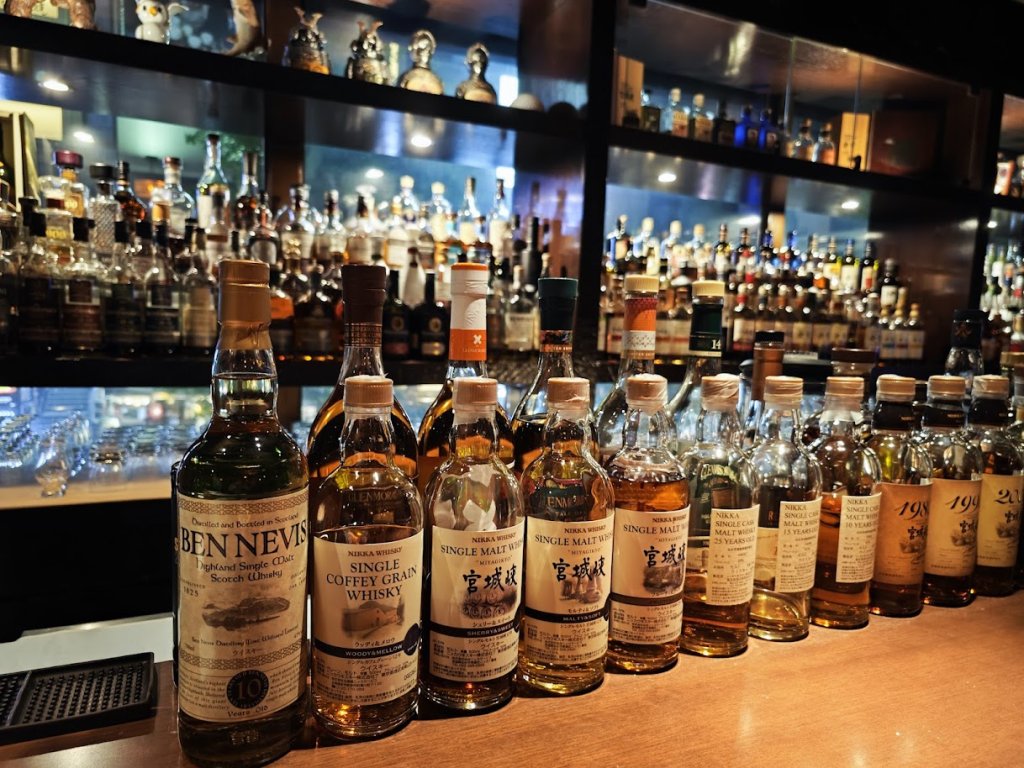
But there is the good news and it’s all brewing [pun intended] as we speak. By next year of 2024, products officially labeled as “Japanese whisky” have to conform to new regulations. Japanese whisky must be fermented, distilled, aged, and bottled in Japan. New distilleries are coming into the marketplace [I’ve even spotted a bunch of newmake on the menus], and, with more supply this promises to knock the prices down, somewhat. I’ve also noticed the new players to produce integrity bottlings by not adding any colour or chill-filtering their product. Yes, a bunch of them still do not carry an age statement, and are probably only somewhere around the 3-5 year mark, but in a decade this should all mature into a better product. The use of traditional oak barrels is all there [I’ve had some fantastic sherried single malt from Akkeshi, (not to be confused with Akashi)], and the higher cask-strength malt is also something to look out for. The “perfection” is starting to give way, and new distilleries begin to experiment more, finishing off the whisky in barrels that previously held sake, shochu, and umeshu (see the small batch of Hatozaki 12-year-old Umeshu Cask Finish]. The new regulations, in particular, will force the hand of the two biggest companies to rebuild the brand behind Japanese whisky, and I definitely see that as a positive on all fronts. We just have to wait a little…
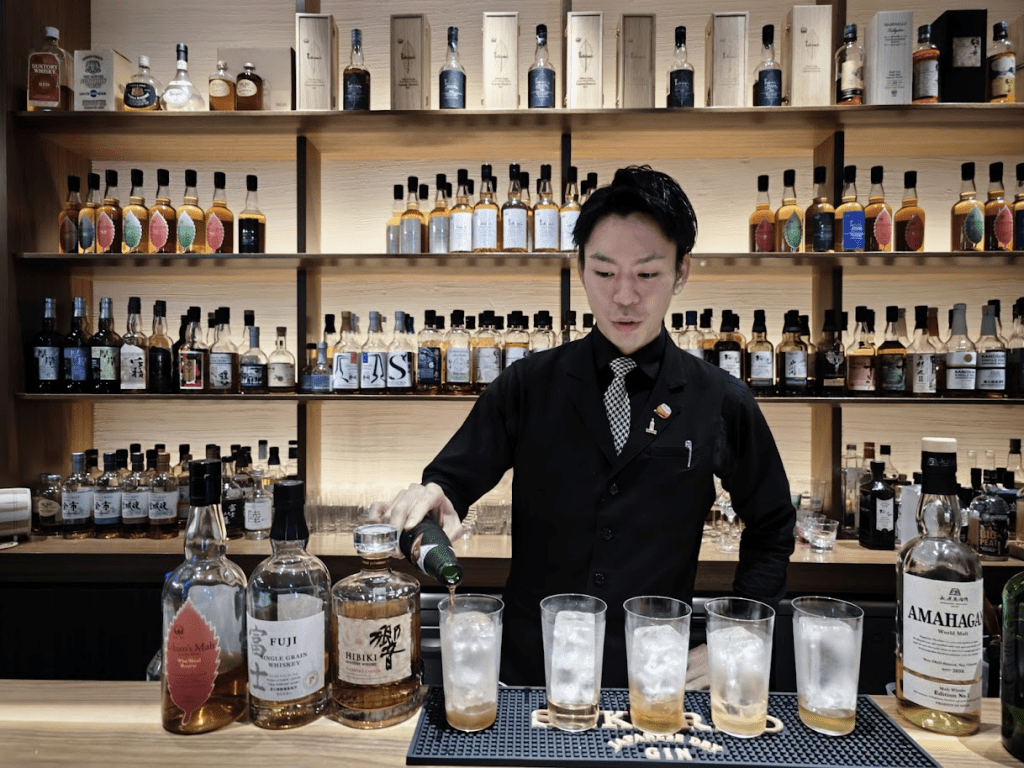
So as I kick off a Japanese-themed journey, I hope to learn a lot more of this drink. I think I’ll also try to pair a few Japanese drams with their Scotch contemporaries to see if there’s a noticable gap among the two. And maybe, in a year or so, I will come back with an entirely new view on this fantastic liquid. Stay tuned! For more photos of my Japan adventure, you can check out my Instagram account.
 Two Drams A Day